
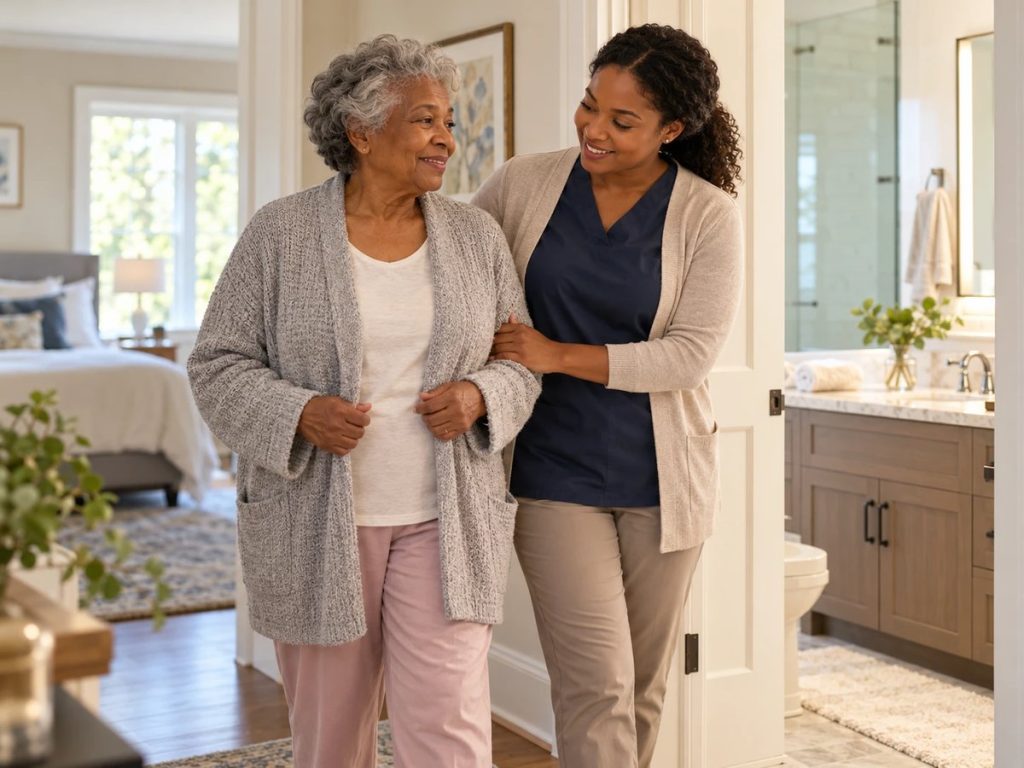
A parent who once managed every morning routine independently may begin avoiding showers, wearing the same clothes for several days, or struggling with buttons and shoes. These changes can be easy to overlook, especially when family members visit only occasionally. For families in Dumfries and across Northern Virginia, bathing assistance for seniors can provide practical support while respecting an older adult’s dignity, comfort, and preferences.
Needing help with personal care does not automatically mean a person must leave home. The first step is to understand what has become difficult, whether the environment is safe, and what level of assistance is appropriate.
Why Bathing and Dressing Can Become Difficult With Age
Bathing requires balance, reaching, stepping into or out of a shower, and managing slippery surfaces. Dressing may involve standing, bending, fastening clothing, and making choices appropriate for the weather. Arthritis, reduced mobility, fatigue, changes in vision, cognitive changes, or recovery after illness can make these tasks harder. A new or sudden change should be discussed with a healthcare professional rather than assumed to be a normal part of aging.
Signs a Senior May Need Bathing Assistance
- Avoiding baths or showers because of fear of slipping
- Difficulty entering or exiting the shower or bathtub
- Trouble washing hard-to-reach areas or managing toiletries
- Repeatedly wearing soiled clothing or appearing uncomfortable
- Needing to hold onto unstable furniture while washing or dressing
These observations are starting points for a respectful conversation, not a diagnosis. Ask the older adult which steps feel difficult and what kind of help they would welcome.
What Does Bathing Assistance for Seniors Include?
Depending on the care plan and the provider’s scope of services, a trained home caregiver may help prepare the bathroom, gather clean towels and clothing, provide standby support, assist with washing, and help the person dry and dress. Some seniors need only reminders or supervision; others need hands-on help. The approach should be tailored to the person’s abilities and preferences, with privacy maintained throughout.
Caregivers providing nonmedical personal care should not be assumed to perform nursing procedures or treat medical conditions. Skin wounds, new rashes, pain, or other concerning changes should be referred to an appropriate clinician.
How Dressing Assistance Supports Comfort and Independence
Dressing assistance for seniors may involve laying out suitable clothes, helping with sleeves, socks, footwear, fasteners, or clothing changes, and allowing extra time. Adaptive clothing or simple fasteners may help some people remain involved in the process. Whenever possible, let the person choose their clothing and complete the steps they can manage safely.

Practical Bathroom Safety Considerations
A bathroom safety review can identify loose mats, inadequate lighting, hard-to-reach supplies, and difficult shower entry. Appropriate grab bars, non-slip surfaces, and a suitable shower chair may be worth discussing with a qualified professional. A towel rack is not a substitute for a properly installed grab bar. Equipment choices should reflect the individual’s mobility and transfer needs.

For a wider room-by-room review, see Eveready’s Fall Prevention at Home: A Practical Safety Checklist for Virginia Seniors.
How to Discuss Personal Care Without Taking Over
Start privately and use specific, nonjudgmental observations: “I noticed the shower step seems harder lately. Would it help to talk about ways to make it easier?” Ask about preferred bathing times, water temperature, caregiver preferences, and cultural or personal routines. Explain each step before assisting and seek consent. If the person declines help, explore the reason and involve an appropriate professional if safety concerns remain.
When Should Families Consider Professional In-Home Support?
Professional assistance may be useful when relatives cannot consistently help with bathing or dressing, when transfers are becoming challenging, or when personal care needs are affecting daily comfort. The number and timing of visits should reflect the person’s routine and the tasks involved, not a standard schedule for every household.

To understand the broader scope of hands-on support, read What Is Personal Care Assistance? A Guide for Virginia Families. Families planning a schedule can also review How Many Hours of Home Care Does a Parent Need?.
Questions to Ask a Home Care Agency
- What bathing and dressing tasks can your caregivers provide?
- How do you assess mobility, transfer needs, and personal preferences?
- Can visits be scheduled around the person’s preferred routine?
- How are caregivers trained, supervised, and matched with clients?
- How are changes in ability or safety concerns communicated to family?
- What services are included, and what affects the cost?
Confirm the agency’s actual services, availability, and assessment process before making arrangements. If a person requires skilled nursing or rehabilitation, ask the healthcare team what additional services are appropriate.
Bathing and Dressing Assistance in Dumfries and Northern Virginia
Eveready Home Health and Home Care serves families exploring in-home support in Northern Virginia. If an older parent is having difficulty with bathing, dressing, or other daily routines, contact the team to discuss the person’s needs, the services currently available, and whether an individualized care assessment would be appropriate.
Visit Eveready Home Health and Home Care to learn more and inquire about support options. You can also read about Eveready’s personal care assistance services.
Frequently Asked Questions
What is the difference between bathing assistance and skilled nursing?
Bathing assistance generally refers to help with personal hygiene and routine activities. Skilled nursing involves clinical services that require appropriately licensed professionals. Ask the provider to explain the distinction for your situation.
Can a caregiver help a senior shower safely?
Depending on the person’s assessed needs and the caregiver’s authorized role, assistance may include preparation, standby support, or hands-on personal care. A person with complex transfer needs may require additional assessment or equipment.
How often should an older adult receive bathing assistance?
There is no single schedule for everyone. Preferences, skin health, mobility, activity, and clinician guidance may all affect the routine.
Can seniors remain independent while receiving dressing assistance?
Yes. Assistance can focus on only the steps that are difficult, allowing the person to retain choice and participation.
How do families arrange bathing assistance at home in Northern Virginia?
Start with a conversation about needs and preferences, then contact a home care provider to confirm services, availability, assessment requirements, and costs.
Final Thoughts
Bathing and dressing are personal routines, and support should feel respectful rather than rushed. By identifying specific difficulties, improving bathroom safety, and choosing the right level of help, families can support an older adult’s comfort and participation in daily life. If you are considering bathing assistance for seniors in Dumfries or Northern Virginia, contact Eveready to discuss available personal care options.
Contact Eveready Home Care | Dumfries: (703) 496-4300