
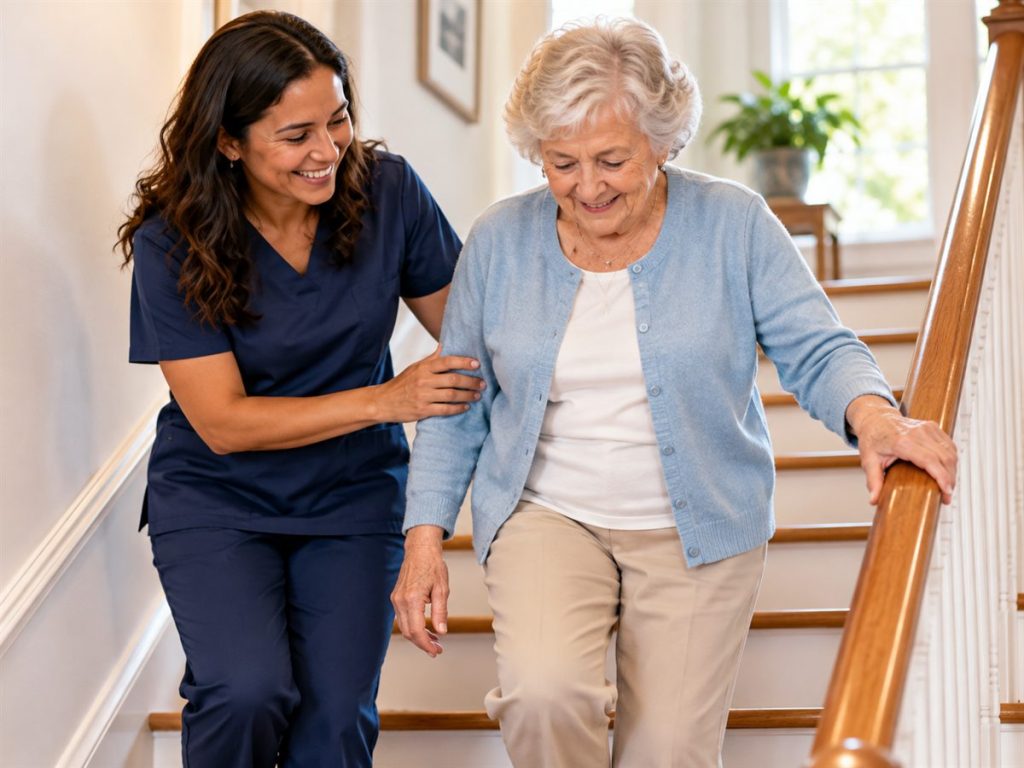
A familiar home can still contain overlooked fall hazards. A loose rug, dim hallway or slippery bathroom floor may become more difficult to navigate when an older adult experiences changes in balance, vision or mobility. For families in Dumfries and across Northern Virginia, a thoughtful home safety review can make daily routines more comfortable and help reduce avoidable risks.
The National Institute on Aging’s room-by-room guidance recommends practical changes to walking paths, lighting, stairs and bathrooms. This checklist turns those recommendations into a manageable starting point for families.
Why fall prevention deserves attention
Fall risk is influenced by more than household clutter. Changes in strength or balance, vision difficulties, certain medicines and underlying health conditions may also contribute. Families should consider both the home environment and the older adult’s individual needs. A healthcare professional can assess concerns such as repeated falls, dizziness or new difficulty walking.
The National Institute on Aging’s falls prevention overview recommends discussing medication effects with a clinician, staying appropriately active and considering vision checks alongside home safety improvements.
Room-by-room home fall prevention checklist
1. Entrances, hallways and stairs
- Remove shoes, bags, cords and other objects from regular walking routes.
- Check that stairs have secure handrails and adequate lighting.
- Repair loose flooring or uneven steps; secure carpeting and remove unstable throw rugs.
- Keep outdoor steps clear and arrange appropriate treatment of slippery paths in winter.
Start with the route your loved one uses most often, such as the path from the bedroom to the bathroom. Walk through it at the time of day they usually use it, including after dark.
2. Bathrooms
- Consider professionally installed grab bars near the toilet and bathing area.
- Use nonslip surfaces in the shower or bathtub.
- Keep toiletries within comfortable reach and dry wet floors promptly.
- Add a night-light for trips to the bathroom.
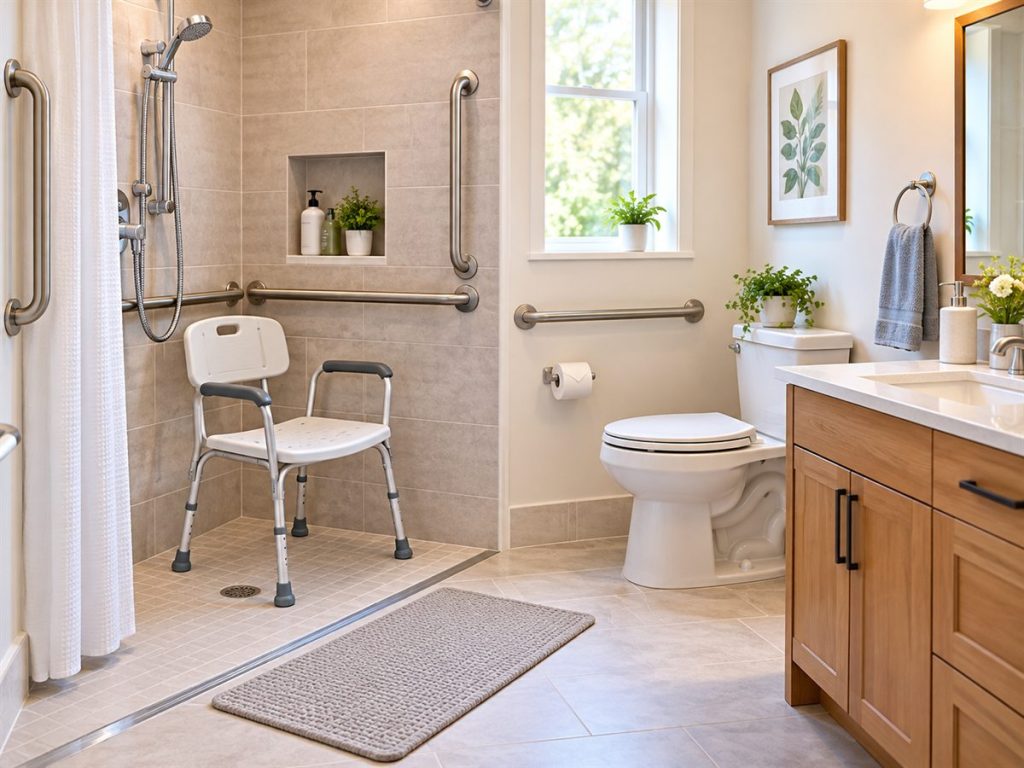
A towel rail is not a substitute for a properly installed grab bar. Ask an occupational therapist about equipment and layout changes when transfers or bathing have become difficult.
3. Bedrooms and living areas
- Place a reachable lamp, phone and essential items beside the bed.
- Keep a clear route between the bed, bathroom and main living areas.
- Arrange furniture to allow enough room for a walker or other prescribed mobility aid.
- Choose stable seating that makes sitting down and standing up easier.
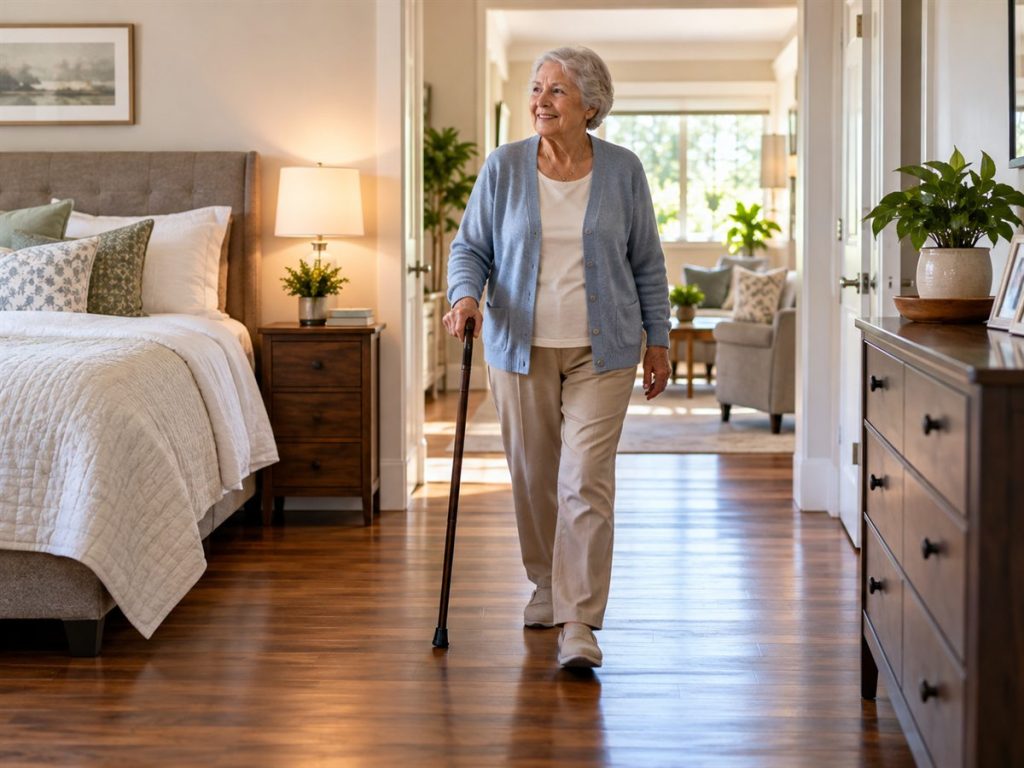
If nighttime movement is a concern, discuss safe routines and the level of assistance needed with the older adult and their care team.
4. Kitchen and everyday tasks
- Store frequently used items at waist height instead of high shelves.
- Clean up spills promptly and keep floors dry.
- Avoid standing on chairs to reach cupboards.
- Plan meal preparation around energy levels and any mobility restrictions.
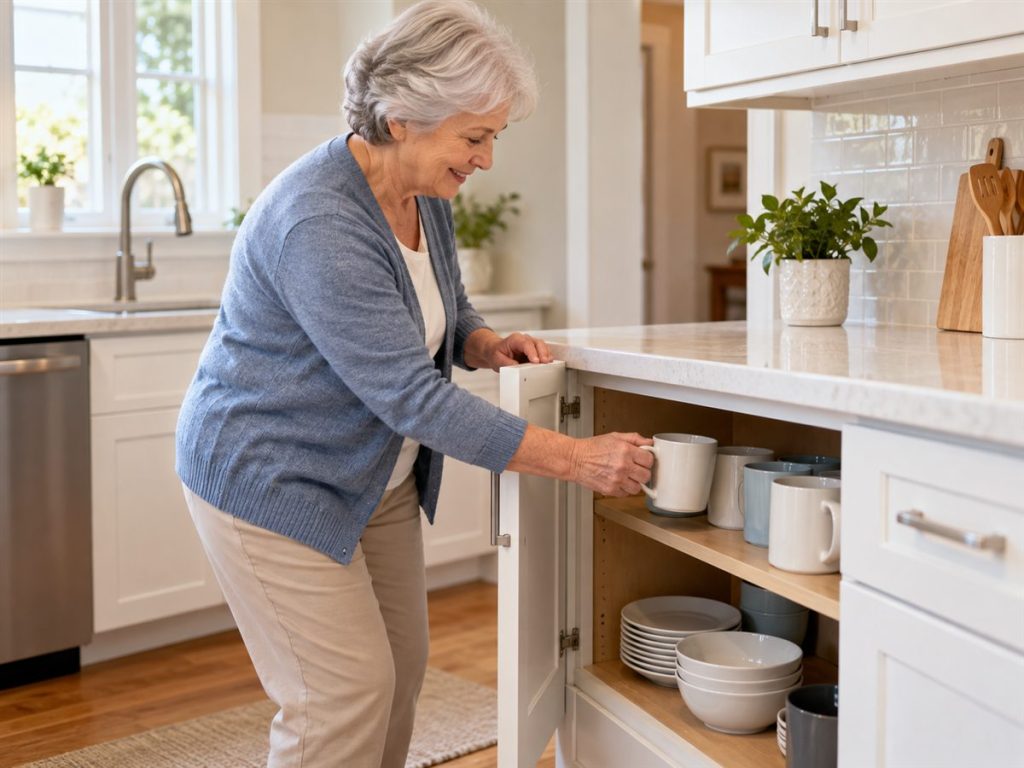
Small adjustments to where everyday items are stored can reduce unnecessary reaching and hurried movement.
Look beyond the home: health and mobility considerations
A safer environment is one part of fall prevention. If an older adult feels unsteady, has recently fallen or is worried about falling, encourage a conversation with their healthcare professional. Depending on their needs, that may include a medication review, vision assessment or referral for physical or occupational therapy. A clinician can also advise on suitable strength and balance activities and safe use of mobility aids.
Families can use the CDC STEADI patient and caregiver resources to guide discussions and identify questions for appointments.
How in-home support can complement a fall prevention plan
Some families can manage household adjustments independently. Others need extra help with routines such as bathing, dressing, walking, transfers or keeping commonly used spaces organized. A home care provider can support daily activities within an agreed care plan, while clinicians address medical and rehabilitation needs.
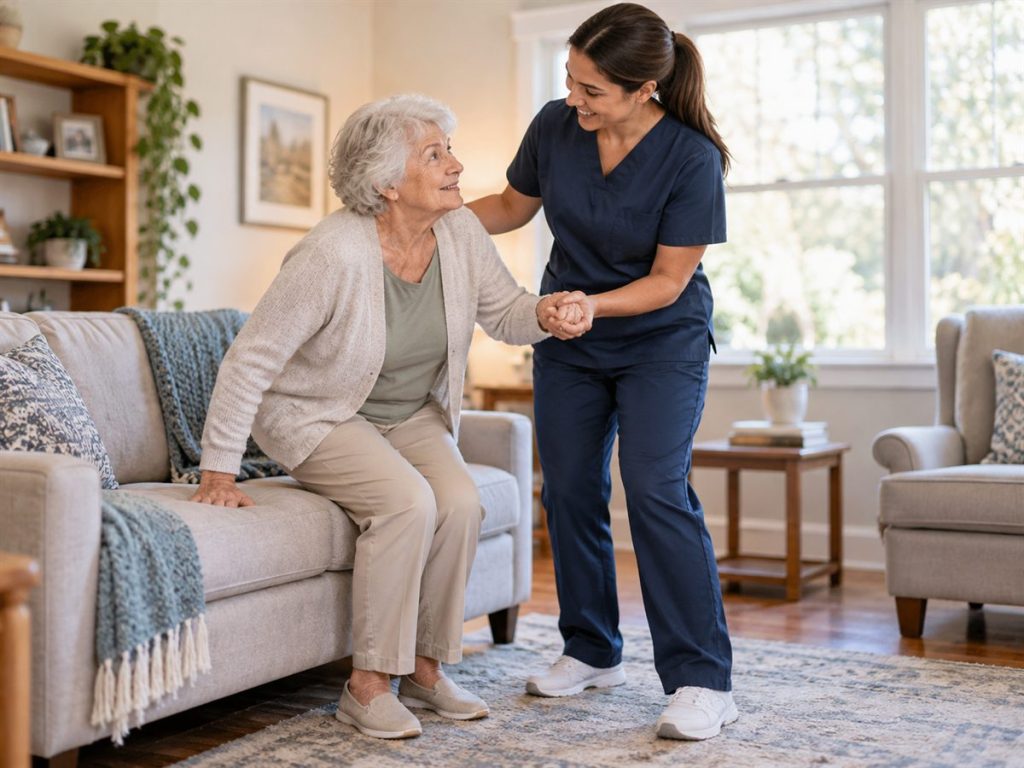
Eveready Home Care describes mobility and safety support as part of its personal care assistance services. Its caregivers can assist with walking, transfers and personal care according to each client’s needs. Families can also explore home support services for everyday household assistance.
If you are deciding whether more help is appropriate, Eveready’s article on when to consider home care for an elderly parent offers additional context. Families arranging care after hospitalization may also find its personal care assistance guide useful.
A simple monthly home safety check
Set aside a few minutes each month to review lighting, floor surfaces, handrails and frequently used walking routes. Revisit the checklist whenever an older adult’s mobility changes, after a fall, or when new equipment is introduced. Ask the older adult which tasks feel difficult; their experience should guide priorities.
Frequently asked questions
What is the first step in preventing falls at home?
Start by clearing walking paths, checking lighting and looking for slipping hazards. Then speak with a healthcare professional if the person has balance problems, recent falls or other concerns.
Do grab bars and nonslip mats eliminate fall risk?
No. They can address specific environmental hazards, but individual factors such as strength, medicines and vision also matter. Proper installation and an individualized assessment are important.
Can a home care aide help someone at risk of falling?
A caregiver may assist with everyday mobility, transfers, bathing and household routines within their training and the care plan. Clinical assessment and treatment should come from qualified healthcare professionals.
When should a family request a professional home safety assessment?
Consider asking a clinician about an occupational therapy or physical therapy assessment after a fall, when walking or transfers become difficult, or when the household is unsure which modifications are appropriate.
Explore personalized home support in Northern Virginia
A safer home starts with practical changes and the right level of support. Eveready Home Care serves families in Virginia, including Dumfries, and offers personal care assistance that includes mobility and safety support. To discuss a loved one’s daily care needs, contact the team and ask about an individualized needs assessment.
Contact Eveready Home Care | Dumfries: (703) 496-4300